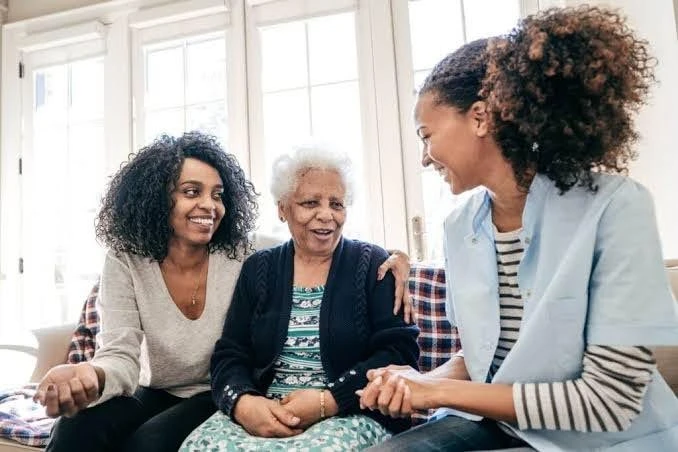
Healthcare marketers spend considerable time defining the patient they want to reach and the healthcare professional they hope to inform. But a third group may be researching treatment options, preparing questions for an appointment and helping put a care plan into practice: the caregiver.
When that person remains folded into a broader consumer audience, marketers can miss what makes their role different. Caregivers are interpreting information on someone else’s behalf, balancing practical responsibilities with emotional pressure, and often helping connect what happens in the exam room with what happens at home.
For Point of Care (POC) planning, that distinction matters. An asset designed to help patients understand a condition may not address the questions a caregiver needs answered to support them.
To explore what a more deliberate approach looks like to caregiver-focused marketing, POCMA spoke with Andrew “Drew” Hansen, CMI Media Group’s Senior Vice President of Engagement Strategy and Ian Essling, CMI Media Group’s Vice President of Audience Intelligence.
Their guidance gives marketers a starting point for improving caregiver communications: understand the caregiver’s role in the specific condition, then build communications around the decisions, questions and responsibilities that come with it.
Define the caregiver by their role in care
“Think of a caregiver as a member of the care team, because that is exactly what they are,” Hansen said.
Depending on the condition in question, the degree of caregiver involvement will vary with the patient’s needs and the progression of the disease.
That perspective changes the planning brief. It also explains why, in many cases, caregivers should not automatically receive the same communications as patients. Hansen pointed to pediatric care as an obvious example: a parent’s responsibilities and understanding differ substantially from those of a seven-year-old child.
The more involved the caregiver, Hansen argued, the more they should be considered as a unique audience in POC planning. “Where caregivers are playing a large role, yes, I think they should be treated distinctly,” he said.
When planning, Hansen advised, marketers should investigate caregiver involvement condition by condition, including how prevalent it is and where it influences the journey. That research should inform audience definitions, content development and channel decisions before the plan is finalized.
This extends the argument in POCMA’s POC As Foundational Spend: What Changes When You Plan It First: bringing POC into strategy earlier creates room to identify the full set of people who influence care. Caregivers belong in that assessment, with their own questions and needs clearly defined.
Build information that helps caregivers advocate
For caregivers, health information at the POC has a job to do. It can help them understand what is happening, identify what to ask and participate more confidently in a conversation about someone else’s health.
Essling shared findings from CMI Media Group’s Media Vitals™ research indicating that 74% of caregivers said the influx of available health information had a positive impact on their ability to advocate for the person they care for. He said advocacy ranked highest among the impacts assessed in that question.
The finding reflects caregivers’ reported perceptions of health information broadly; it does not isolate the effect of a POC campaign. But it offers a useful planning principle: evaluate content by whether it equips caregivers to do something meaningful with the information.
In terms of what works, practically speaking, Hansen recommended discussion guides grounded in real-world questions, condition and treatment education with an appropriate level of detail, and clear information about potential costs. A guide should help caregivers raise their actual concerns, rather than steer every question toward a brand’s differentiating feature.
Further, marketers could build resources around questions such as what to expect from treatment, what support may be needed at home, and which affordability questions to raise with the care team. The content should make the next conversation easier to navigate.
That makes usefulness a creative requirement. A caregiver should be able to recognize why a resource matters, find the relevant information and understand what to do next.
Use POC media to connect research with the care conversation
Caregivers are gathering information across multiple environments. Essling described health-related websites, provider-office materials, search and AI tools as sources caregivers find useful. In the research he cited, information in the healthcare provider’s office ranked second among most helpful sources (38%), behind health-related websites (41%).
He also reported that POC ranked first when caregivers were asked which sources they referenced in their most recent conversation with a doctor.
Those are of course different measures, but together they help explain POC’s role in caregiver education and advocacy. Caregivers may encounter information elsewhere; POC can put relevant information close to the moment when they need to ask a question or discuss a decision.
“It’s all about credibility and proximity,” Hansen said.
The experts described how the clinical setting can lend information perceived credibility, while its proximity to the conversation helps keep it top of mind. That perception places a responsibility on marketers to make materials accurate, useful and easy to discuss. Placement in an office should not be presented as proof of a clinician’s endorsement.
Hansen also emphasized the importance of care-team distribution. A resource becomes more connected to care when a provider finds it useful enough to share and discuss with a patient or caregiver.
This aligns with POCMA’s coverage of HCP and DTC message alignment, which explores how consistent, accessible resources can support shared understanding during and after an encounter. Caregiver planning should extend that alignment to the person who may help recall the discussion and carry out the next steps.
Offer a clear entry point and a path to more detail
Treating caregivers distinctly does not mean assuming they all need simplified information. Some are learning about a diagnosis for the first time. But others have spent years researching a condition and following developments in treatment.
Hansen’s recommendation when designing caregiver-friendly communications was to organize information so people can choose the depth they need.
“Start at a high level and offer more for those who want to go deeper,” he said. A POC resource might begin with a concise explanation and a few relevant questions, then offer a path to more detailed information.
Essling said CMI’s social listening has revealed patients and caregivers engaging with clinical trial information, including detailed research that marketers might once have thought was only resonant with HCP audiences. These observations should prompt brands to investigate their own audiences’ interests, rather than assume every caregiver wants - or can readily interpret - the same level of detail.
The goal is to make credible information navigable. In POCMA’s 8 Things Healthcare Professionals Want Pharmaceutical Marketers to Know in 2026, clinicians described the difficulty of turning abundant information into clarity. A layered approach gives marketers a way to respond while respecting caregivers’ appetite for knowledge.
Accessibility also requires practical choices. Hansen emphasized readable materials, online and offline options, and resources that caregivers or their care teams can find easily. A digital link is helpful only if the intended audience can use it; a printed guide needs a clear structure too.
Timing matters as much as depth. Someone adjusting to a loved one’s diagnosis may first need help understanding what it means. Another caregiver may already be focused on treatment logistics. Content should reflect that difference.
Recognize the person carrying the responsibility
Caregiver communications also need to acknowledge the person doing the caring.
Essling reported that 63% of caregivers in the Media Vitals research used some form of support group, including online or in-person communities. He also said stress management ranked fourth among the types of health and wellness information caregivers regularly sought, and that caregivers overindexed on that need compared with patients.
These findings suggest that a strategy focused entirely on the patient’s condition can miss an important part of the caregiver’s experience.
Hansen described caregivers’ need for empathy and relief, including the guilt some may feel about needing support themselves.
“Make it okay for them to ask for the help that they need,” he said.
For marketers, that can mean acknowledging caregiving responsibilities in the language and situations depicted in creative, making relevant support resources easier to find, and reducing the effort required to navigate information. Empathy should shape the experience of using a resource as well as its tone.
It also requires investigating barriers before prescribing a communications solution. Hansen offered the hypothetical example of a recommended test that patients are not completing. Cost might be the problem, but caregivers could also be struggling with transportation, scheduling or fear of the result.
“The behavior alone is not going to reveal the why behind the signal,” he said.
Essling recommended combining social listening, primary research and search trends to understand those underlying needs. Observing a missed step in the journey is a starting point. Understanding why it was missed is what allows marketers to build something useful.
Measure whether the content supports participation
Like any other strategy, a caregiver strategy needs a defined objective and a measurement approach suited to it.
Hansen identified adoption and adherence as relevant outcomes in conditions where caregivers play a substantial role. He also encouraged marketers to listen to advocacy communities to understand how information is being received and discussed. Essling emphasized that success depends partly on a brand’s stage: a campaign building awareness may need different measures from one supporting an established treatment.
At the POC, Hansen suggested comparing relevant performance measures in offices with messaging against comparable offices without it. He also recommended engagement mechanisms, such as QR codes, to understand whether people act on materials.
These approaches answer different questions. A scan can demonstrate interaction, but cannot by itself establish that the user was a caregiver or that the content improved a clinical conversation. Office-level comparisons can help assess performance, but require careful design before attributing differences to the campaign or to caregiver engagement specifically.
Marketers can complement those measures by asking caregivers whether materials helped them prepare questions, understand next steps or participate in the discussion. The measurement plan should connect the intended audience, the content’s purpose and the evidence needed to assess its value.
Give caregivers a place in the plan from the start
As marketers develop their next POC plans, caregivers deserve explicit consideration during audience strategy. Where they play a meaningful role, that role should shape the brief, the resources created, the handoff between channels and the definition of success.
The practical test is whether the plan helps caregivers do the work they are already taking on: understand, prepare, advocate and support follow-through. That requires condition-specific research, information that meets different levels of understanding, and recognition of the emotional demands involved.
POC offers a setting in which those needs can meet a real care conversation. Planning for caregivers deliberately can help ensure that the people supporting the patient are better supported themselves.