8 Things Healthcare Professionals Want Pharmaceutical Marketers to Know in 2026
BlogsThursday Jan 29, 2026
Healthcare is evolving at a breathtaking pace. New therapies, technologies, care models, and information sources are reshaping how patients learn and engage with the healthcare system as they’re making critical decisions about their care.
These changes present new challenges for a key audience: Healthcare Professionals (HCPs). Inside exam rooms, infusion centers, pharmacies, and clinics, healthcare professionals describe their reality in 2026 as one defined by limited time, rising patient anxiety, fragmented systems, and growing responsibility spread across increasingly complex care teams.
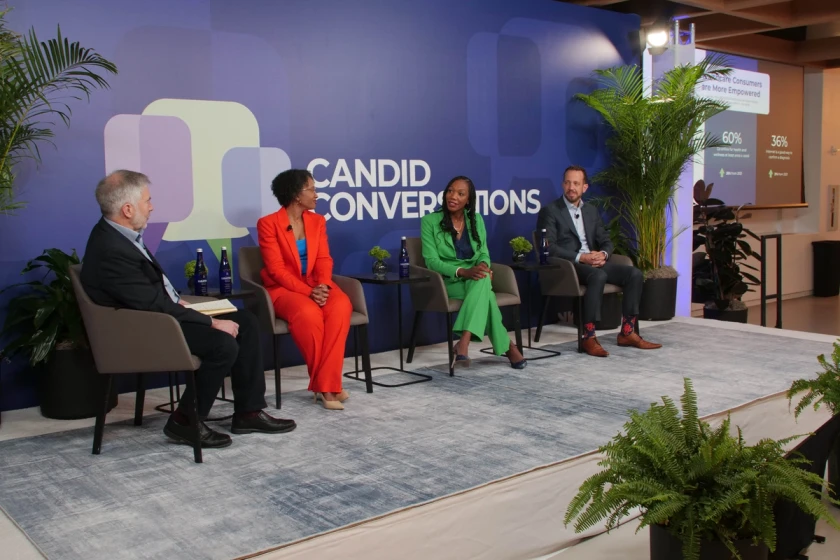
We spoke with thirteen HCPs who are navigating the daily realities of patient care during our recent Candid Conversations event. And they shared what actually helps—and what quietly undermines care delivery—with our audience of pharmaceutical and healthcare marketers. What became clear across these discussions is that the challenge isn’t awareness. Pharmaceutical and healthcare marketing teams largely understand what’s changing. The gap lies in execution—translating these realities into tools, education, and engagement that actually fit the point of care.
Here’s what the HCPs want pharmaceutical and healthcare marketers to understand as they look ahead to 2026.
Key Themes
- Patients Are Overloaded With Information, Not Clarity
- Patient Trust Is Built Through Curiosity, Not Correction
- Repetition Is Not Redundancy—It’s How Learning Happens
- Care Is a Team Sport—Yet Pharma Still Thinks in Silos
- Generic Education Tools Undermine Confidence at the POC
- Cost and Ease of Use Remain, Silent Drivers of Non-Adherence
- AI Is Embedded in Care, so the Industry Must Embrace It
- Value Is Defined by Workflow Fit, Not Presence
1. Patients Are Overloaded With Information, Not Clarity
Why volume without framing increases confusion
The HCPs we spoke with repeatedly described an ongoing shift in how patients arrive at the Point of Care (POC). Patients are no longer passive recipients of information. Patients come prepared, shaped by the information they’ve encountered online. That preparation, however, is often inconsistent, emotionally charged, and sometimes incorrect.
Clinicians described patients arriving with TikTok videos, AI-generated summaries, direct-to-consumer advertising claims, and anecdotal advice from online communities—all layered together without context or clear framing. Access to information increases engagement, but at the cost of introducing fear, confusion, and setting unrealistic expectations.
“I love when patients come in with videos, or come in as Dr. Google or Dr. TikTok...because it invites trust and the ability to see where people are getting information from....and then I lead with curiosity."

Dr. Bayo Curry-Winchell
Physician & Health Advocate
Clinicians Who Care
HCPs described this dynamic as particularly challenging in areas like oncology, cardiometabolic disease, and chronic care, where decisions carry emotional weight and long-term implications.
“I tell my patients, bring me everything you’ve heard—good and bad—because I need to know what’s scaring you. We decide together what’s true, what’s false, and what actually applies to you."

Tracy Norfleet, MD, FACP, DABOM, DipABLM, MBA
Physician, CEO
Weight Liberation®
2. Patient Trust is Built Through Curiosity, Not Correction
Why correction-first education erodes trust
Fostering patient trust emerged as a foundational theme across every HCP conversation. Without patient trust, it’s unlikely patients will follow through on their care plans. HCPs were clear that patient trust is fragile—and easily disrupted by how health information is delivered. And they emphasized the strong psychological component to effective care: when patients feel dismissed, they disengage.
“[To be successful], I need to gain your trust and make sure that we have an established relationship."
Tracy Norfleet, MD, FACP, DABOM, DipABLM, MBA
Physician, CEO
Weight Liberation®
Clinicians emphasized that correcting misinformation too bluntly can erode trust, particularly when patients feel emotionally invested in what they’ve learned. Several healthcare providers described intentionally starting visits by asking patients where their information came from—not to challenge it, but to understand it. Honoring a patient’s effort to research their condition matters, even when the information is wrong.
This approach allows clinicians to reposition themselves as partners rather than gatekeepers, which is especially important given short visit times and increasing patient skepticism driven by misinformation.
3. Repetition Is Not Redundancy—It’s How Learning Happens
Why one-and-done education fails patients
The HCPs we spoke with consistently stressed that patients rarely absorb critical information the first time they hear it—particularly when the stakes are high. That’s why clinicians value reinforcement through repeated exposure to health information over time.
Dr. Bayo recommended that clinicians and pharmaceutical marketers put themselves in the shoes of patients as they process information about their care: “If I was in [their] situation, I probably would have to hear [the information] four to six times to really process.”
Providers described intentionally pacing education across multiple visits, reinforcing key messages through verbal explanations, visuals, digital tools, and written follow-ups. In oncology settings, for example, several HCPs noted that patients may not even remember portions of initial diagnosis conversations.
Patients may nod, for example, but they’re not really hearing the HCPs—their minds are often elsewhere. Rather than viewing repetition as inefficiency, clinicians framed it as compassion—allowing patients time to process information emotionally before making decisions.
4. Care Is a Team Sport—Yet Pharma Still Thinks in Silos
Why siloed targeting breaks continuity of care
HCPs emphasized that care decisions are not driven solely by the physician and often include team-based care. For example, physician associates (PAs) and nurse practitioners (NPs) are not just writing what the physician tells them—they’re making independent decisions every day. Pharmacists described their role as both educators and navigators—answering questions, troubleshooting side effects, and helping patients understand affordability options.
Regardless of the type of HCP involved, all the clinicians we spoke with stressed that a single provider prescribing a therapy is only the beginning of a patient’s care journey.
“Movement of medication from A to B is only half the journey. The other half is whether the patient actually takes it.”

Dean Gruber
Vice President of Trade; Clinical Pharmacist
Altcare Health Services dba altScripts Specialty Pharmacy
Clinicians outside of the prescribing provider or specialist often play major roles in follow-up care and treatment adherence. Yet pharma marketing often continues to speak to HCP audiences narrowly, without considering the patient’s full care team involved in decision-making.
Clinicians also highlighted gaps in communication across specialties, noting that therapies prescribed by one provider may be discontinued by another due to misunderstandings or a lack of shared education.
Taken together, these realities point to a broader disconnect between how pharmaceutical marketing is structured—and how care is actually delivered at the POC. Addressing that disconnect requires more than messaging; it requires rethinking how education and support are operationalized across teams, settings, and workflows.
5. Generic Education Tools Undermine Confidence at the Point of Care
Why generic tools undermine confidence in patient visits
Despite the volume of educational materials available, HCPs expressed frustration with collateral that fails to meet patient needs in real-world settings. Generic pamphlets don’t help—patients look to providers for guidance, and clinicians need something meaningful to offer.
“Just handing [patients] a piece of paper upon discharge is no longer the way we should be delivering care,” shared Dr. Bayo.
Clinicians described materials that are overly dense, poorly designed, or disconnected from patient literacy levels—especially problematic when patients are anxious, newly diagnosed, or navigating complex treatment regimens.
“You really need to lead with curiosity and find out what parts of information they gravitate toward,” recommends Dr. Bayo.
Providers also emphasized the importance of visual education tools, particularly for explaining mechanisms of action, administration techniques, or treatment timelines.
6. Cost and Ease of Use Remain, Silent Drivers of Non-Adherence
Why unspoken barriers quietly drive abandonment
Across specialties, HCPs identified affordability and usability as persistent, and often hidden, barriers to adherence.
“My dad didn’t take a medication for a year and a half because it was $450, and he didn’t tell anyone,” shared a hospitalist.
Others described patients struggling with injections, pill size, or administration schedules—yet feeling embarrassed to ask questions or admit difficulty. Rather than raising concerns, many patients quietly stop treatment.
"Pharmacist involvement helps optimize treatment management and patient understanding."

Vicki Sherry, DNP, ANP-BC, AOCNP
Oncology Nurse Practitioner for Thoracic Malignancies
Penn Medicine Abramson Cancer Center
Clinicians emphasized that when cost or usability issues surface early—and without stigma—outcomes improve. Too often, patients disengage quietly.
7. AI Is Already Embedded in Care—So the Industry Must Embrace It
Why Ignoring AI leaves clinicians to manage its impact alone
“Patients put everything into ChatGPT before they come in. My job is to take that response and bring it to a higher level."
An endocrinologist
HCPs described using AI for documentation, research, and decision support, while also managing patient anxiety fueled by incomplete or misleading AI-generated information.
Several clinicians noted that patients increasingly trust AI outputs, sometimes more than clinician guidance, particularly when time is limited.
8. Value Is Defined by Workflow Fit, Not Presence
Why workflow disruption negates even well-intentioned engagement
Perhaps the most consistent message HCPs shared was that pharma intent does not always translate into value.
Unexpected interruptions, lengthy presentations, and irrelevant outreach were widely described as disruptive—regardless of how well-intentioned they may be.
“What helps is a two-minute update,” noted an endocrinologist. “Tell me what changed—what barriers are gone.”
HCPs emphasized that the most valuable engagement from pharma respects time, anticipates needs, and integrates seamlessly into existing workflows.
Looking Ahead: Designing Messaging for Reality, Not Aspiration
Our discussions with HCPs reinforced a simple but powerful truth: healthcare professionals want partners who understand the human side of care.
Fear, uncertainty, time pressure, and fragmentation define modern healthcare. Yet interactions at the POC remain powerful—not because they capture attention, but because this is where trust is built, decisions are made, and vulnerability is real.
These healthcare provider insights are not abstract. They reflect the daily realities that healthcare professionals already navigate. While the insights here surface what’s changing—and where current approaches may fall short—the next step is to understand how to translate them into practical, real-world action at the POC.
Addressing these challenges will require new operating models for Point of Care marketing—ones designed for real workflows, real constraints, and real decision-making environments.
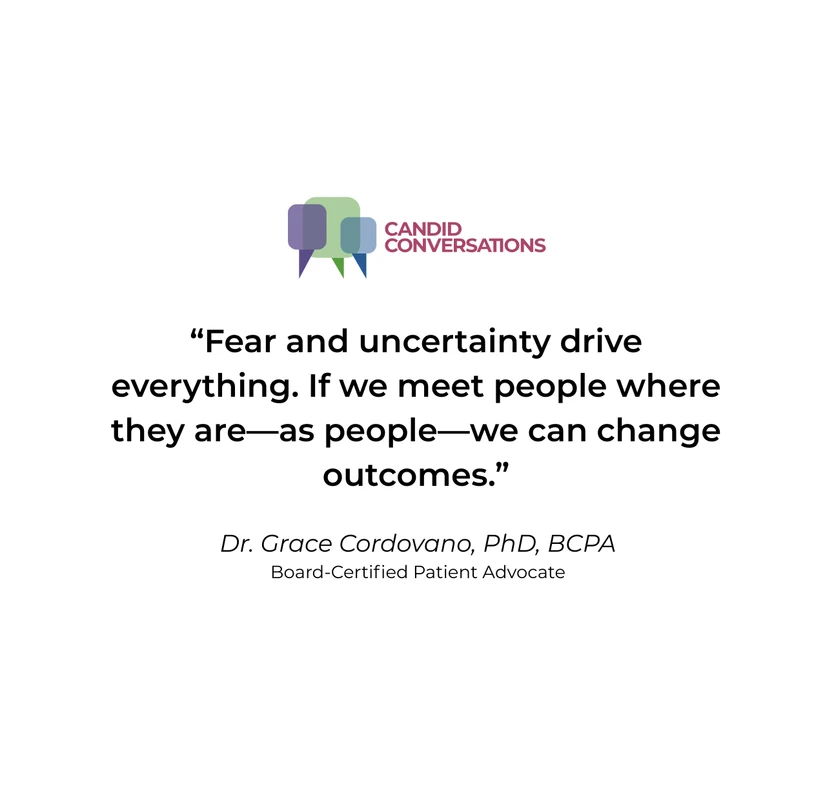
Dr. Grace Cordovano summed it up: “Fear and uncertainty drive everything. If we meet people where they are—as people—we can change outcomes.”