What Pharma Can Learn From Cannes Lions: Key Insights and Trends for 2027 Planning
BlogsMonday Aug 3, 2026
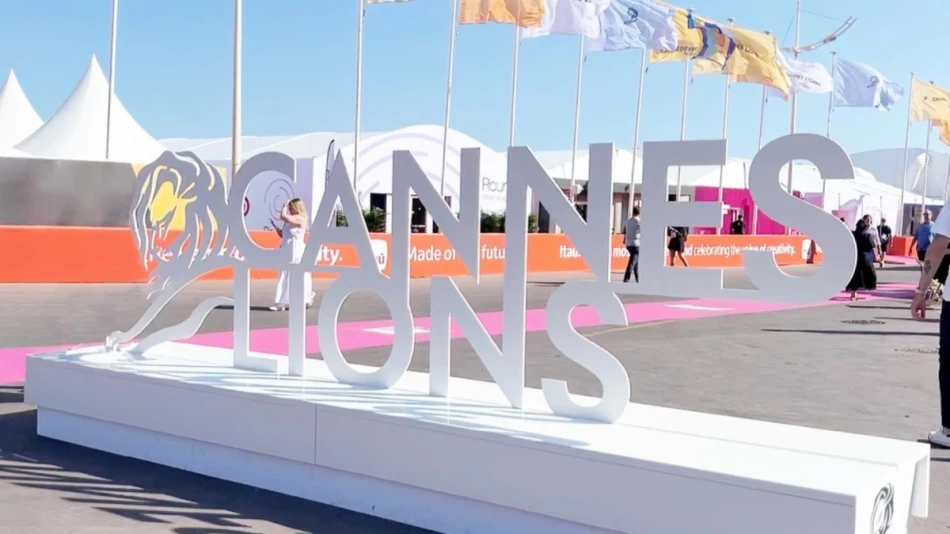
Every summer, the global marketing, media, and technology sectors converge on the French Riviera for the Cannes Lions International Festival of Creativity. What originated in 1954 in Venice, Italy - inspired by cinema screen advertising contractors who believed commercial filmmakers deserved the same recognition as feature filmmakers - found its permanent home in Cannes in 1984. Over the last seven decades, Cannes Lions has grown from a specialized gathering celebrating 30-second broadcast commercials into a global benchmark for the marketing industry.
Today, Cannes Lions is where the global "who’s who" of marketing convenes: C-suite executives, advertising agencies, emerging technology platforms, and media partners alike. And while the festival built its early reputation as a hub for CPG marketers, healthcare marketers are beginning to show up in strength on the Croisette.
We sat down with several healthcare marketing leaders who attended Cannes this year to get their perspective on the trends they saw at the festival that can inform how our industry plans for 2027.
Trend 1: Healthcare’s Expanding Footprint on the Croisette
Historically, conversations about healthcare marketing at Cannes were isolated to small side rooms while mainstage programming focused almost exclusively on celebrating traditional broadcast ads for CPG brands. But today, health and wellness brands occupy prime real estate across the Croisette, due in part to growing healthcare marketing spend and the rise in awareness of glucagon-like peptide-1 (GLP-1) therapies among consumers.
David Paragamian, CEO of Health Monitor Network and POCMA’s Board Co-Chair, observed this evolution firsthand throughout his career as both a creative agency leader and a Point of Care (POC) executive. He noted that the healthcare’s growing presence at the festival reflects the changing realities of where brands invest their media dollars:
"[Cannes] is not a festival anymore that celebrates [just] packaged goods [and] 30 second advertising. [It celebrates] the multiplicity of all the surfaces that marketers get to paint on. And so it becomes even that much more relevant for health and wellness and pharma brands."

David Paragamian
CEO
Health Monitor Network
Mark Boidman, Head of the Media & Entertainment Group at Solomon Partners, echoed Paragamian’s sentiment, emphasizing that healthcare companies are no longer attending Cannes merely to observe, but to actively deploy substantial capital. Boidman explained:
"Healthcare brands are there in force. And why are they there more? Because they're putting real dollars into advertising now more than they have before. They need to know trends in Cannes and be part of the discussions, because [healthcare] is one of the largest advertising categories now."

Mark Boidman
Head of the Media & Entertainment Group
Solomon Partners
The GLP-1 Cultural Phenomenon
A major catalyst for the expanding healthcare footprint at Cannes is the rise of GLP-1 therapies. GLP-1s are now a part of the mainstream cultural zeitgeist - and they’ve created a brand awareness and relevance halo effect for the industry.
Linda Ruschau, Chief Commercial Officer at PatientPoint, highlighted how GLP-1s dominated discussions among top agency leaders and brand marketers at Cannes. Reflecting on insights shared by PHM’s Andrea Palmer and Eli Lilly’s Megan Suttile, Ruschau noted:
"GLP-1s have overtaken Al as the dominant cultural conversation…[they’re] so common, [they’re] like a drugstore brand. We’ve never had a category in pharma like this [before]."
Paul Theisen, Co-Founder and CEO of Populus Health Technologies, reinforced the massive economic and cultural weight of the market embracing GLP-1s, stating plainly:
"The GLP-1 trend has got to be the greatest invention in the 21st century, right alongside AI. Its impact on consumer lifestyles and healthcare outcomes is undeniable. So naturally, it’s also having an outsized impact on the Point of Care marketing sector."
The pervasiveness of GLP-1 messaging has reframed public consciousness around health interventions. And it’s forced healthcare marketers to manage portfolios much like CPG companies - with multiple SKUs, broad consumer interest, and direct-to-patient digital ecosystems. In this environment, doubling down on driving discoverability, brand halo, and cross-channel trust are essential for long-term category leadership in pharma.
Trend 2: AI Disruption, Media Fragmentation, and the Durability of Point of Care
Those we spoke with also cited media fragmentation and the rapid rise of Generative AI and agentic workflows as major conversations among healthcare marketing leaders at Cannes. The headline? As artificial intelligence transforms search engines into answer engines, traditional digital discovery models are decaying.
When consumers rely on AI agents to manage search queries, evaluate products, or handle booking logistics, standard digital display ads and search marketing lose visibility. However, this digital disruption highlights the unique strength of channels like Point of Care, which sit closer to the point of decision for patients and providers and often exist in trusted physical or digital spaces.
Boidman offered a stark perspective on how AI will alter media consumption over the next five years, noting that advertising - particularly in and around medical settings - will stand out as durable, indestructible assets:
"Technology is a friend to all media outside the home, including the Point of Care universe. Technology is not a friend to other media channels. When it comes to mobile phones, radio, TV, or print, technology is likely to disintermediate all of those channels, including online advertising, whether it's through agents or technologies to skip or block the ads. But you don't have that in Point of Care."
Boidman expanded on this dynamic by comparing the growth in Point of Care to the rapid growth of Retail Media. While Retail Media networks capture consumers at the point of sale, Point of Care captures individuals at an even more critical juncture - the moment of care:
"If retail media is at the point of sale and owns that point of purchase, Point of Care [similarly] owns that moment of care."
"Point of care is like Out of Home on steroids, because of the fact that it's just so well measured by independent third parties from an attribution and behavior change standpoint. It's real."
Maturation and Proven Accountability
POC’s physical durability is supported by its advanced measurement capabilities. Point of Care media has moved well beyond top-of-funnel impression counts to deliver verified health outcomes, script lift, and clear return on investment (ROI) through sophisticated marketing mix modeling (MMM).
Paragamian contrasted the vanity metrics of digital media with the real-world performance metrics required in healthcare and offered by POC:
"[POC is] no longer the add-on tactical element to the marketing plan. We are one of the foundational elements to a great marketing plan, [because] we have the metrics that matter most [to a brand manager]. We'll take it all the way through to prescriptions [and] ROI and drive an outcome for the brand, not simply an action and activity of a click or an eyeball."
David Paragamian
CEO
Health Monitor Network
Trend 3: Breaking Silos—POC as the Connective Tissue of Omnichannel Strategy
Despite the industry’s widespread use of the word "omnichannel," pharma and healthcare organizations also continue to operate in functional silos. Direct-to-Consumer (DTC) media, Healthcare Professional (HCP) communications, linear broadcast, and digital activations are frequently managed by separate internal teams or siloed agencies.
Ruschau highlighted that this siloed planning creates friction for patients and healthcare providers. Because the Point of Care environment is the single location where the patient, the provider, and the treatment decision intersect, POC can serve as the natural bridge across these disparate strategies.
"There was a lot of talk [in Cannes] about siloed verticals within marketing. I don't think that's any surprise. And so I came away with this aha [moment] that Point of Care can be [the channel] that connects it all. It’s the one place where you're talking to the patient and the doctor at the same time.”
“There's no reason you couldn't show one of your social influencers in the doctor's office. It gets your attention. It's [relatable]. You could be touting support groups and advocacy groups, affordability messaging."

Linda Ruschau
Chief Commercial Officer
PatientPoint
The POC leaders who attended Cannes also urged marketers to consider the full patient journey when planning POC activations - and that the full patient journey often includes both digital and physical touchpoints.
They advised looking at POC investment in a coordinated way, recommending that marketers view layering POC tactics not as an "either/or" choice between physical tactics and digital ones, but as a unified approach that ensures they’re hitting each touchpoint in the patient journey.
Rather than viewing physical visits and virtual care as competing channels, for example, Theisen described digital tools as the connective layer that links discrete physical healthcare moments together:
"You drive or take the train to your doctor's office so you can get your annual physical. But then the glue to all of it now in 2026 are these digital touchpoints and virtual Point of Care engagements. It's around convenience, it's following the consumer, following the patient. The name of the game for marketers is focusing on that now expanded…and differentiated…patient journey"

Paul Theisen
Co-Founder and CEO
Populus Health Technologies
When brand teams align their DTC and HCP strategies at the Point of Care, and then consider placements across virtual and in-person settings, they can convert broad awareness into productive clinical discussions.
Trend 4: Authenticity, Creators, and the Power of Purpose-Driven Storytelling
Cannes Lions remains, at its core, a celebration of powerful human storytelling. For healthcare marketers, the most resonant campaigns are grounded in authentic human experiences rather than clinical data, which can sometimes present as dry or disengaging.
Humanizing Healthcare Messaging
Ruschau highlighted compelling presentations from global consumer leaders—such as Unilever and Eli Lilly—that demonstrated the impact of purpose-driven, emotionally honest marketing.
In a talk at Cannes, Lina Polimeni, Chief Marketing Officer at Eli Lilly, emphasized that brand strategy must begin with clear conviction rather than a standard campaign brief. She noted that healthcare messaging should focus on overall health rather than illness, using a clear sunscreen analogy: individuals do not wait until they are burned to protect their skin.
Polimeni showcased Lilly’s emotional campaigns addressing obesity-related stigma and Alzheimer’s disease, reinforcing that legacy brands must be built on empathy and real-world support for patients and caregivers.
Similarly, Ruschau recalled an emotional presentation by Unilever’s Global CMO. He urged marketers to shift toward meaningful brand building, citing Dove’s campaigns on eating disorders and Vaseline’s "Go Shine" initiative as examples. From this advice, Ruschau notes:
"We forget that [our audiences] are humans. We have to appeal to the consumers out there and think about them as real people.'"
To do so, Ruschau recommends focusing on how pharma marketing communications can improve the lives and mindsets of the patients and providers they serve:
"These are people who are sick…how do I humanize that? And how do I take this incredible opportunity and responsibility to help make [life] a little bit better for them? Let's not [always] show models that look healthy and aspirational, let’s show people that look [real] because they feel terrible that day, but help them feel aspirational that they can get [better]."
Unlocking the Creator Economy in Health
Cannes is also becoming a space for more and more creators. And in pharma, patient advocates and content creators can play a vital role in building brand trust. Shamekka Marty, a patient advocate and creator who partnered with Novo Nordisk and Black Doctor at Cannes, stressed that healthcare has unique advantages when it comes to reaching and connecting with audiences, because everyone has been a patient as some point in their lives:
"Everybody is a patient at some point or another, and that's the way that [pharma] marketing has to target [its audience]."
However, Marty warned that rigid corporate approvals and heavy-handed scripts often diminish the impact of creator partnerships. When brands force creators to read stiff, corporate copy, they alienate the very audiences those creators built.
"[Creators] thrive because we're doing it on our own terms. Even if I just say [a script] and rehearse it 50 times to sound natural, it does not sound like me."
Marty advised brands to involve creators early in the planning and campaign development process, allowing them to capture authentic, real-time moments that foster trust while remaining compliant.
The Intersection of Sports, Culture, and Health
Marty also pointed to the influence of professional sports in demystifying health conditions and driving real-world action. Pointing to major activations at Cannes like Sport Beach, she noted that athletes carry unique cultural authority when speaking about health and wellness:
"[Don’t underestimate] the power of sports and the power of health. [If] you hear, 'Hey, this tennis player has diabetes, [and] in between matches puts in his insulin’ that's real [and impactful].”

Shamekka Marty
Patient Advocate
Keeping the "Spice" in Creative
Finally, Ruschau shared a memorable analogy presented by two creative agency founders during a Cannes session. They cautioned that modern advertisers, out of fear of offending audiences, often strip the creative energy out of their campaigns:
"They [did] this whole analogy of what happens when you take the spice out of the salsa. And they're like, 'that's what we've done in advertising. We've become so hypersensitive that we don't want to offend anyone that we've taken the spice out of the advertising.' Let’s not be insensitive, but let's not be so hypersensitive that we can't be creative anymore."
Effective healthcare marketing requires memory-building creative. Marketers must embrace compelling storytelling, bold visuals, and genuine human emotion to create lasting brand impact.
Strategic Roadmap for 2027 Planning: What Point of Care Marketers Should Do Next
As healthcare executives and media planners establish their strategic priorities for 2027, the primary lessons from Cannes Lions offer a clear roadmap. To stay competitive, marketers must translate the four major trends our POC leaders observed on the Croisette into direct action:
1. Capitalize on the Cultural Relevance of Health: With treatments like GLP-1s transforming pharma into a mainstream, culturally relevant category, marketers must manage their brand portfolios more like CPG leaders. Focus heavily on discoverability and brand halo effects. And ensure that your corporate brand represents holistic health, is empathetic, and offers lifestyle support rather than just clinical efficacy.
2. Anchor Your Plans in Durable, AI-Resistant Channels: As generative AI disintermediates mobile search and traditional digital display, relying solely on top-of-funnel digital tactics is a liability. Marketers must elevate Point of Care to a foundational anchor of 2027 media plans. By investing in the physical "moment of care," brands can secure visibility in highly trusted environments that boast verifiable measurement like direct script lift.
3. Use POC to Break Down Omnichannel Silos: Stop planning DTC and HCP campaigns in isolation. Point of Care is the only environment where the patient and the physician are in the same room making a shared decision. Marketers should use POC as the connective tissue that merges social influencer awareness ("what is this like?") with clinical authority ("what do I have?"). Ensure that digital touchpoints like patient portals and telehealth reminders seamlessly connect the physical visits.
4. Co-Create with Creators and Lead with Empathy: Sterile, over-sanitized clinical ads fail to build memory structure. Healthcare brands must partner with patient creators and advocates early in the campaign process, allowing them to speak authentically to their communities without rigid, unnatural scripting. Don’t take the "spice" out of the creative—show the real, unfiltered patient experience to build deep emotional resonance and trust.
5. Treat AI as a Supportive Tool, Not the Hero While AI is disrupting media, it shouldn't be the centerpiece of your creative strategy. As Paragamian framed it, AI is "is the direct object not the subject noun in the sentence." Leverage AI internally to accelerate content production, enhance targeting, and optimize clinical trial recruitment, while anchoring your actual media spend in durable, real-world channels that humans trust.
6. Embed Health Equity and Accessibility into Campaign Strategy Healthcare activations must prioritize access and equity. Marty called on the industry to ensure that healthcare messaging and physical events accommodate diverse patient populations, noting that "Health equity access determines a better outcome in every single aspect." Marketing strategies must address linguistic diversity, physical accessibility, and socioeconomic realities to deliver meaningful health outcomes across all demographics.
Claiming Point of Care’s Space on the Croisette
The key takeaway from Cannes Lions is that the tangible world—the environment where patients consult providers, consider options, and make health decisions—remains the most valuable media space in healthcare. Digital noise and AI-driven search disruption are elevating the importance of trusted, context-rich environments.
As planning for 2027 begins, healthcare brand leaders must bring bold, human-centered storytelling directly into the moment of care.
Point of Care media sits at the intersection of medical authority and human empathy. And by elevating POC from a tactical line item to a foundational media anchor, pharma and healthcare marketers can bridge the gap between digital awareness and real-world health outcomes.