With each passing year, patients and healthcare professionals (HCPs) are exposed to more health information than ever before, making it increasingly difficult for them to separate signal from noise. For pharma marketers and media planners looking to reach these audiences, this presents a unique challenge - how do you cut through that noise efficiently with your media investment? Which places and spaces should you show up in to ensure your message is heard and acted upon?
We believe Point of Care media is worthy of significant investment in 2027, as it’s the only place where provider and HCP conversations converge in the moments immediately before, during and following care visits. POC works because it reaches patients and providers at the exact moments that matter most—when diagnoses are made, treatments are considered, and prescriptions are filled. Patients and HCPs arrive at the POC in a conscious mindset, where they’re actively considering solutions for their care that they’re ready to action.
For those considering Point of Care (POC) media as a core part of their 2027 media mix, below is your comprehensive guide to POC planning, covering the data-backed value of the channel, tactical selection resources, campaign principles, and deep insights into the modern HCP mindset that can help you get your message across more effectively.
Why Invest in Point of Care? The Data-Backed Reality
Before selecting specific POC tactics for your 2027 media plan, it’s crucial to understand why the POC ecosystem continues to command higher portions of healthcare marketing budgets year over year. Recent M3 MI data reveals that POC education directly improves both patient and provider outcomes by leveraging receptivity, decision proximity, and trust.

Unmatched Patient Receptivity and Trust
Patients in clinical settings are actively seeking answers, making them highly receptive to relevant education.
- A staggering 90% of patients find education at the Point of Care important to understanding their health.1
- This engagement is skewing even younger, with Gen Z being 8% more likely than the average patient to value this in-clinic education.1
- Proximity to decision-making drives action: 61% of patients are willing to ask their doctor for a prescription medication or drug sample they saw or heard advertised at the POC.1
- Furthermore, 61% of patients state that pharma ads make them more knowledgeable about medications.1
- Trust in pharma is also amplified in these settings; patients who noticed an ad in a doctor's office or pharmacy are 7% more likely to trust the pharma companies that advertise the medications they take.2
Influencing Shared Decision-Making
Point of Care effectively bridges the gap between patient curiosity and provider validation.
- Among patients who noticed a healthcare ad in a doctor's office, 60% agree they will often discuss new prescription medicines with their physician.1
- On the clinical side, 96% of physicians provide patients with education or disease maintenance information.2
- When patients do initiate these conversations, providers appreciate the support; 75% of physicians who have their treatment decisions influenced by patient requests find POC patient education very useful or useful.2
Driving Adherence and Clinical Outcomes
The ultimate goal of any pharma campaign is improving patient health, and POC integration directly correlates with medication adherence.
- Among patients who saw a prescribing HCP and noticed an ad in the doctor's office, 70% filled a prescription or took a medication.1
- For comparison, among those who did not notice an ad, only 55% took those same steps.1
- However, marketers must prioritize clarity: 35% of physicians find patient education materials too complicated for patients to easily understand.2
- Consequently, 64% of physicians state they would provide more support materials and tools if they were more customized to their patients.2
See the full M3 MI findings here.
Navigating the Ecosystem: The POC Product Finder
Now that we’ve established the value and impact of investing in POC advertising, your next step in 2027 planning is to identify the right POC products to leverage. The POC ecosystem is vast, spanning physical offices, digital patient portals, and pharmacy shelves.
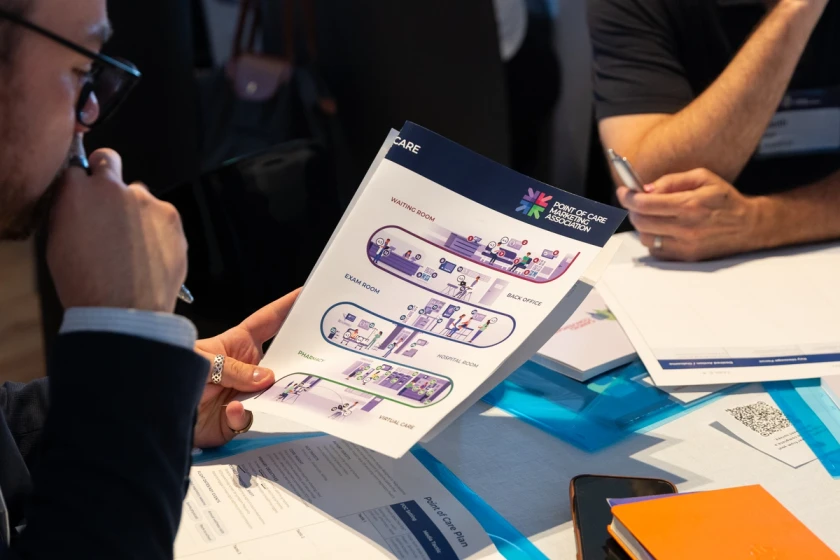
To streamline this process, marketers can utilize the POC Product Finder. This tool allows you to filter specific media solutions by audience, HCP specialty, care setting, and media tactic, ensuring your campaign aligns perfectly with your strategic objectives.

Patient & HCP Tactics at the Point of Care: A Reference Guide
To maximize the utility of the Product Finder, it helps to understand how different tactics align with specific moments in the care journey. Below is a breakdown of POC products categorized by their clinical environment.
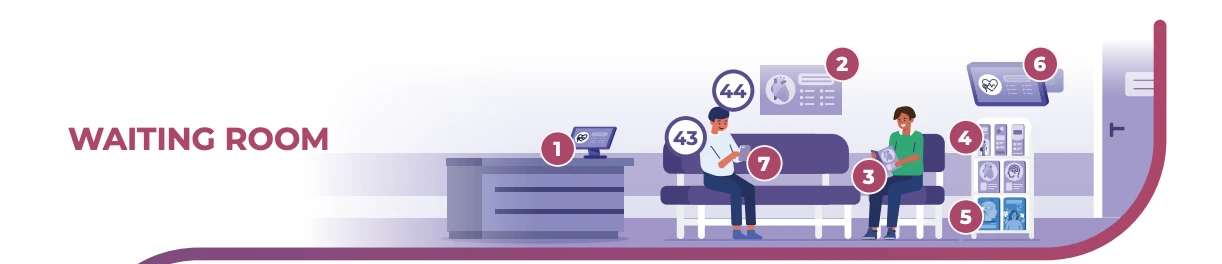
The Waiting Room: The waiting room is a moment of anticipation, where patients and caregivers process uncertainty and prepare for important conversations and decisions with their healthcare provider. It is an opportunity to deliver meaningful education, reassurance, and support before the care interaction begins.
- Tactics: Check-in Device, Posters & Wallboards, Custom Condition Guides, Brochures, Magazine Cover Wraps, Digital Screens, Patient Wi-Fi, Mobile, and DTC Podcasts.

The Exam Room: The exam room is where healthcare decisions take shape. Questions are answered, treatment options are discussed, and patients leave with a clearer path forward. As one of the most important moments in the care journey, it is a critical opportunity to provide resources and support that help patients and providers make more informed decisions together.
- Tactics: Digital Wallboards, Clinical Decision AI, Electronic Health Records (EHR) and E-Prescribing (eRx) platforms, Discharge Bags, Brochures, Posters & Wallboards, Custom Condition Guides, and Mobile.
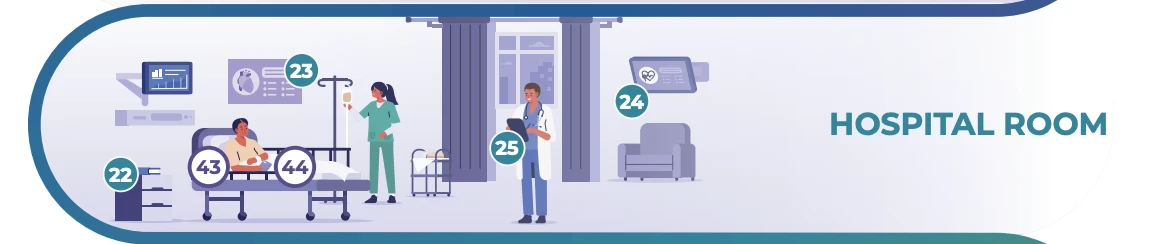
The Hospital Room: The hospital room is where some of the most emotional moments in healthcare take place. Patients and caregivers are navigating complex information, important treatment decisions, and ongoing recovery, making clear communication, education, and support especially important throughout the care experience.
- Tactics: Channel Guides, Posters & Wallboards, Digital Screens, Electronic Health Records (EHR) and E-Prescribing (eRx) platforms, Mobile, and DTC Podcasts.

The Pharmacy: The pharmacy is where the care plan becomes action. Beyond dispensing medication, pharmacists help reinforce treatment decisions, answer important questions, and support patients as they begin and maintain their therapy journey. It’s a moment where education, confidence, and adherence come together to support better outcomes as patients or caregivers fill their prescriptions.
- Tactics: Wellness Kiosks, Electronic Health Records (EHR) and E-Prescribing (eRx) platforms, Shelf Displays, Brochures, Posters & Wallboards, Digital Screens, Digital Wallboards, Pharmacy Bags, Pharmacy Kits, Pharmacy Patient Apps, Addressable Checkout Prints, Pharmacy Augmented Reality (AR), Mobile Drive-thru Messaging, and Mobile.

The Back Office: The back office is where healthcare providers step back to review information, finalize decisions, and prepare for what comes next. Away from the immediacy of patient interaction, it becomes a focused moment for reflection, education, research, and clinical decision-making that helps shape the overall care journey.
- Tactics: Interactive HCP Screens, Custom Condition Guides, Posters & Wallboards, Clinician Guides, Electronic Health Records (EHR), Provider Wi-Fi, Digital HCP Resources, Mobile, and HCP Podcasts.
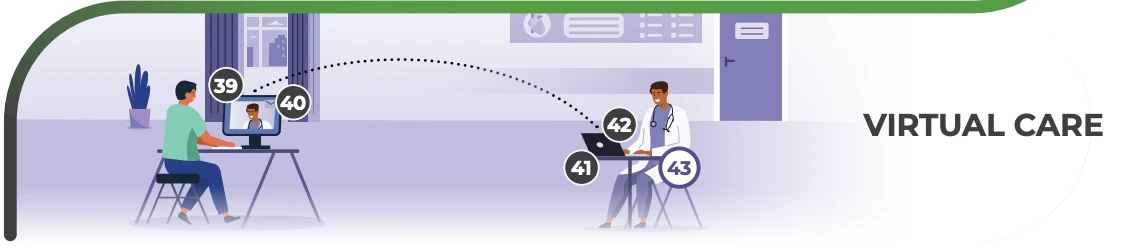
Virtual Care: Virtual care gives patients more flexible and convenient ways to access care wherever they are. By reducing traditional barriers such as travel, scheduling, and time away from work, virtual care creates new opportunities for engagement, education, and connection throughout the care journey.
- Tactics: In-Visit Integrations, Patient Portal Messaging, HCP Inbox Messaging, Pre- and Post-HCP Telemedicine Messaging, and Mobile.
This guide to POC tactics can help you get started with your planning efforts.
From Awareness to Action: 10 Principles for High-Impact Campaigns
Once you’ve selected your tactics, execution is everything. POC works because it meets people where decisions already happen. To ensure your 2027 campaigns are relevant, trusted, and measurable, adhere to these 10 core principles.
Phase I: Plan
1. Target Moments of Decision: The care journey is full of decision points. Map them before you build your plan—diagnosis, treatment selection, adherence, follow-up. Your campaign should be engineered around those moments of action, not retrofitted to them.
2. Build the Right Audience: The right audience isn't just who generates claims—it's who shapes care. Start with the full clinically relevant universe, narrow by objective, and prioritize influence.
3. Target with Precision: Precision starts with the right data. Use deterministic clinical, behavioral, and identity-based signals to target with relevance.
4. Bridge HCP and Patient Engagement: Coordinate patient and HCP engagement across key touchpoints. Ensuring messaging is aligned for both audiences reinforces continuity and maximizes omnichannel impact.
5. Plan for Compliance Early: The most effective POC programs align early with legal, privacy, and regulatory teams. As AI, personalization, and healthcare data become more integral to execution, proactive collaboration enables innovation and reduces risk.
Phase II: Engage
6. Integrate, Don't Interrupt: The most effective POC feels useful, not promotional. For patients, that means showing up from diagnosis through adherence. For providers, it means embedding into the systems and workflows where decisions actually happen.
7. Optimize for the Environment: Each Point of Care setting presents a unique opportunity for engagement. Tailor creative, messaging, and formats to the context; a one-size-fits-all approach undermines POC's core advantage.
8. Lead with Education, Not Promotion: POC environments are emotionally charged, and patients are navigating uncertainty. Deliver credible, relevant content that helps them feel informed, supported, and prepared to make decisions with greater clarity and confidence.
9. Don't Overlook Pharmacy and Care Teams: Pharmacists, nurses, specialty pharmacies, and other care team members influence treatment initiation, access, affordability, and adherence. Build them into your POC strategy as a core part of how care gets done.
Phase III: Optimize
10. Define Success and Measure What Matters: Align stakeholders on objectives, KPIs, and measurement plans before launch. Focus on outcomes such as prescription lift, treatment initiation, adherence, and patient activation to connect campaign performance to real-world impact.
Download these tips here before you begin drafting your 2027 media plan.
Understanding the Provider: HCP Mindset Highlights
A massive part of why POC media is so effective is because it displays within proximity to trusted healthcare professionals. However, HCPs are navigating growing pressures, including limited time, rising patient anxiety, and increasingly complex care environments, which makes reaching and engaging them properly so important.
In order to build the right messaging at the POC, it is critical to understand what clinicians actually need from pharma marketers in 2027.
- Bring Clarity: Patients are overloaded with information. They are arriving at appointments having consumed information from social media, AI tools, and online communities. The most valuable pharma education helps bring clarity and credibility, not more noise.
- Be Curious. Don’t Correct: Trust is built through curiosity, not correction. Patients want their concerns acknowledged—even when the information they bring is incomplete or incorrect. Educational tools should support collaborative conversations rather than shutting them down.
- Understand & Prioritize Messaging for Team-Based Care: Care is delivered by teams, not individuals. Modern healthcare is increasingly team-based, involving physicians, nurse practitioners, physician associates, pharmacists, and care coordinators. Marketing strategies that focus only on reaching the prescriber risk missing critical decision moments.
- Be Specific: Generic education tools no longer work. Dense brochures and one-size-fits-all materials often overwhelm patients during already time-constrained visits. Effective POC education must be modular, visual, and tailored to the patient's immediate needs.
- See Cost as a Barrier: Cost and usability are major drivers of adherence. Patients frequently abandon therapies due to affordability challenges or difficulty using medications. Marketers can help by normalizing conversations about cost and support programs early in the care journey.
- Understand the AI Factor: AI is already shaping healthcare conversations. Patients increasingly arrive with AI-generated answers, while clinicians are beginning to incorporate AI tools into decision-making. Pharma should produce accurate, evidence-based information that elevates these conversations rather than competes with them.
- Realize that Clinical Workflow is Everything: Value is defined by workflow fit, not presence. At the POC, relevance outweighs reach. Anything that adds friction, interrupts care, or demands additional effort risks being ignored.
Download the full set of HCP recommendations here.
Final Thoughts for 2027
As you finalize your media plans for 2027, remember that the most successful pharmaceutical marketing does not just capture attention; it facilitates care. By leveraging data-backed insights, navigating the ecosystem strategically with the right tactical mix, adhering to core campaign principles, and deeply respecting the realities of the clinical workflow, your brand can drive outcomes that matter to both patients and providers.
Sources:
1M3 MI’s 2026 MARS Consumer Health Study
2M3 MI’s 2025 Sources & Interactions + Digital Insights Study