How Kaila Mines is Redefining Point of Care for the Next Generation of Marketers
BlogsMonday Apr 27, 2026
Point of Care (POC) media is going through a transformation - alongside the evolving healthcare ecosystem, its perception among marketers and pharma brands has also shifted. Once considered a secondary media tactic, some are now calling Point of Care media the "connective tissue" of the modern healthcare journey.
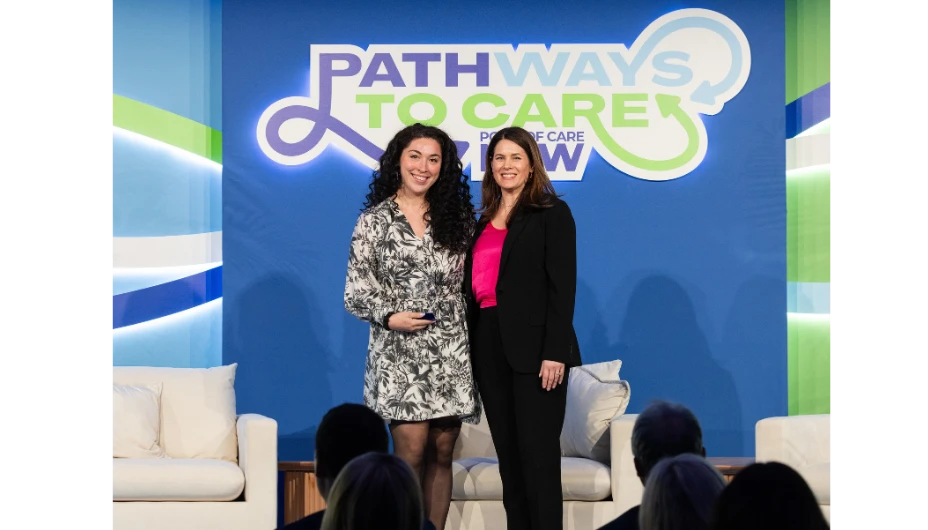
At the center of this transformation is Kaila Mines, Associate Director of Point of Care at PHM, whose recent recognition at the POC Excellence Awards underscores a pivotal moment for the industry at large.
Presented at this year’s POC Now Summit, the POC Excellence Awards were established to recognize the campaigns driving significant impact at the Point of Care—and even more importantly, the people who make the industry so special.
Among the most prestigious honors is the Rising Star Award, which recognizes an individual who entered the POC marketing industry within the past one to two years and has quickly made an impact. By bringing a fresh perspective, innovative thinking and emerging leadership to the field, Kaila has proven herself to be an architect of our industry's future.
"I got into healthcare marketing because I really like the idea of working on something that has a real world impact beyond media performance," Kaila explains. "You're not just driving awareness, but you're also helping people make decisions about their health, which [is] really meaningful to me."
Kaila’s Journey from Consumer Marketing to Healthcare
Kaila’s career in media began far outside the world of pharmaceuticals. Before joining PHM, she spent years in event planning and consumer marketing, working with global brands like Audible and Travelers. These early career experiences beyond POC media allowed Kaila to develop some of her greatest strengths, and encouraged her to view patient engagement through the lens of human experience.
Following those experiences in consumer marketing, moving into a highly regulated industry required a significant pivot—a challenge Kaila acknowledges by honoring her mentors, who quickly helped her understand the complexities of the field. "I was really intimidated by [POC] at first, because when you're working on the consumer side of things, it's a little scary when you hear pharma," Kaila admits. "[But getting acclimated to pharma] is all about the people that you work with and the management that you work with... I was so lucky to have an amazing manager who had worked in the industry for over 15 years, and she mentored me in my new role working in pharma."
That mentorship provided the springboard Kaila needed to take ownership of a significant portfolio. Today, she oversees POC media planning for more than 20 brands and manages a passionate team of leaders. Her ability to translate consumer-level engagement into outcomes is what defines her as a next-generation innovator.
Kaila’s Strategic Bridge: Elevating POC within the Integrated Strategy & Breaking the Silos of Media Planning by Encouraging Message Alignment across Channels
So, how does Kaila approach media planning for the brands she manages?
A core pillar of Kaila’s philosophy is reframing how media teams and pharma brands view Point of Care in the first place.
"For me, [I recommend] reframing Point of Care from something that's “a nice to have” to something that plays a really specific role in the journey," Kaila notes. "I usually position it as the bridge between anything we're doing upstream, like digital or TV, and the actual moment of decision."
When a patient sees a TV commercial for a medication, for example, they are building awareness. When they scroll through a digital ad, they are building interest. But when they are sitting in a waiting room or an exam room, they are in the "decision mindset," Kaila shares.
She explains the unique power of the POC environment: "It reinforces messaging patients [and providers] may have already seen... but it does so in a setting that feels more credible and relevant because they are sitting inside doctors’ offices."
By aligning the messaging they see on their phones with the screens or condition guides they encounter in the office, Kaila creates a cohesive narrative that empowers the patient to speak up to their healthcare provider (HCP) during their appointment.
Demonstrating Measurable Value at the POC: The Shift to Outcome-Based Metrics
In order to prove the efficacy of the POC media campaigns she looks after, Kaila is a vocal advocate for moving beyond "vanity metrics" and focusing on data that actually moves the needle for brand managers.
"I try to keep the focus on outcomes and not just activities," Kaila asserts. "So things like script lift, new patient starts, or cost per outcome tend to resonate the most, especially when you compare [these outcomes] to different media channels."
While some marketers can get distracted by data spotlighting exposure or the sheer number of screens available in a given setting when planning POC media, Kaila remains focused on the outcome-driven metrics. And, while she acknowledges that while Point of Care might not always be the largest channel in a specific media mix, she believes its efficiency is unmatched because of its placement at the very bottom of the marketing funnel.
"Even though [POC is] not the largest channel, it's the one that I believe is the most efficient when it comes to driving action because it is just prior to the moment that patients and [providers] are sitting together," she says. This focus on moments of consideration allows her to justify increased investment in POC even when budgets are tight, proving that the channel is a high-impact driver of healthcare outcomes.
Leadership in a "Structured, Collaborative" Environment
Kaila’s approach to management also reflects a maturity beyond her years in the industry. To manage a portfolio of over 20 brands while leading a team, Kaila has developed a specific leadership style she calls "structured and collaborative." In high-stakes media planning environments, Kaila shares, clarity is the most valuable currency.
"I think one of the most important things as a leader is to create clarity," Kaila explains. "I focus on bringing organization to complexity, whether that's through defining roles, improving workflows, or translating strategy into clear next steps."
The Power of Ownership and Advocacy
Kaila doesn’t believe in micromanagement; instead, she emphasizes "strong ownership." By giving her team the tools they need and then trusting them to lead their respective brands, she fosters an environment of accountability.
"I think the biggest learning over [my] last two years [in POC media] has been [to bring] people in earlier and [be] really clear up front about key deliverables," she shares. "A lot of the challenges in Point of Care really come down to priming and alignment."
Looking Ahead: Shaping the Future of Engagement & Evolving the HCP Experience
As she continues to build her career in Point of Care, Kaila is already looking ahead toward the next five years for the industry. While much of the current focus in POC is on the patient experience—waiting room screens, digital check-ins, and patient education—she sees an untapped opportunity in supporting the Healthcare Provider (HCP).
"I think we've seen really strong evolution and how we can engage patients...but there's still more I think we can do to support providers within that same environment," Kaila predicts.
She believes the next wave of innovation will involve tools and media that assist HCPs during the diagnostic process or help them communicate complex treatment plans more effectively to their patients. By aligning the patient’s education with the doctor’s support tools, Kaila is helping to shape a future where the Point of Care is a closed loop of communication that significantly improves health outcomes.
A Call to Action for the Next Generation of POC Leaders
Kaila represents the essence of the POC Excellence Awards—a professional who is data-driven, strategically minded, and deeply empathetic. Her advice for those looking to enter the field is simple: don't let the perceived complexity of pharma scare you away.
"[Working in POC] has been a very rewarding experience for me," Kaila concludes. "So if you're thinking about doing it, or if you're nervous about going into the pharmaceutical space, I would say, just go for it, because there is just so much meaning and impact that you feel working on [this] specific channel. Take the jump if [working in POC] is something that you're looking to do and don't be scared."
As Point of Care continues to cement its place as a cornerstone of the healthcare media landscape, it will be leaders like Kaila—innovators who see the bridge between media and medicine—who ensure that the industry continues to drive impact where it matters most.