From Moments to Momentum: What Pharma Marketers Need to Know from the 2026 POC Now Summit
BlogsWednesday Apr 1, 2026
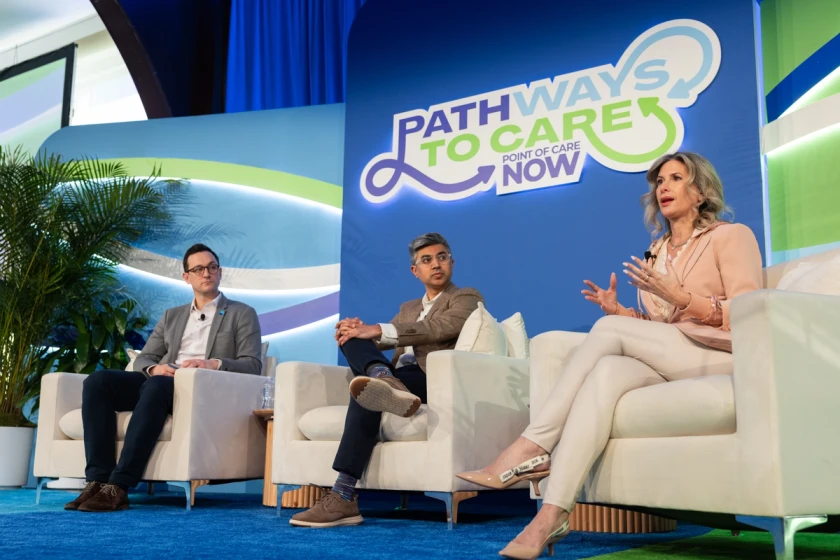
The 2026 POC Now Summit, held on Wednesday, March 18th at Pier Sixty in New York City, made one thing unmistakably clear: Point of Care (POC) isn’t just a channel—it’s the connective tissue of modern healthcare.
Across sessions, speakers consistently returned to one theme: healthcare decisions are no longer confined to a single moment, a single provider or a single setting. Instead, they unfold across a dynamic, multi-touch journey—one that spans environments, stakeholders, technologies and time.
Journeys that once felt linear are now fluid. This means that modern POC media plans need to be integrated across channels and tactics in order to be effective. For pharmaceutical marketers and media planners, the shift in how healthcare journeys unfold carries profound implications.
Success at the POC is no longer about showing up in isolated moments. It’s about orchestrating experiences across the entire care journey—before, during and after the clinical encounter—while aligning with the evolving needs of both patients and providers.
Below are the key takeaways from this year’s Summit—and what they mean for marketers looking to drive meaningful impact at the POC.
The Point of Care Isn’t Limited to One Place—It’s a Pathway
For years, Point of Care has been defined by its physical environments: the waiting room, the exam room, the pharmacy counter. These spaces still matter—but they no longer tell the full story. What emerged clearly from this year’s conversations is that Point of Care is better understood as a sequence of connected moments that collectively shape decisions, rather than a set of discrete touchpoints.
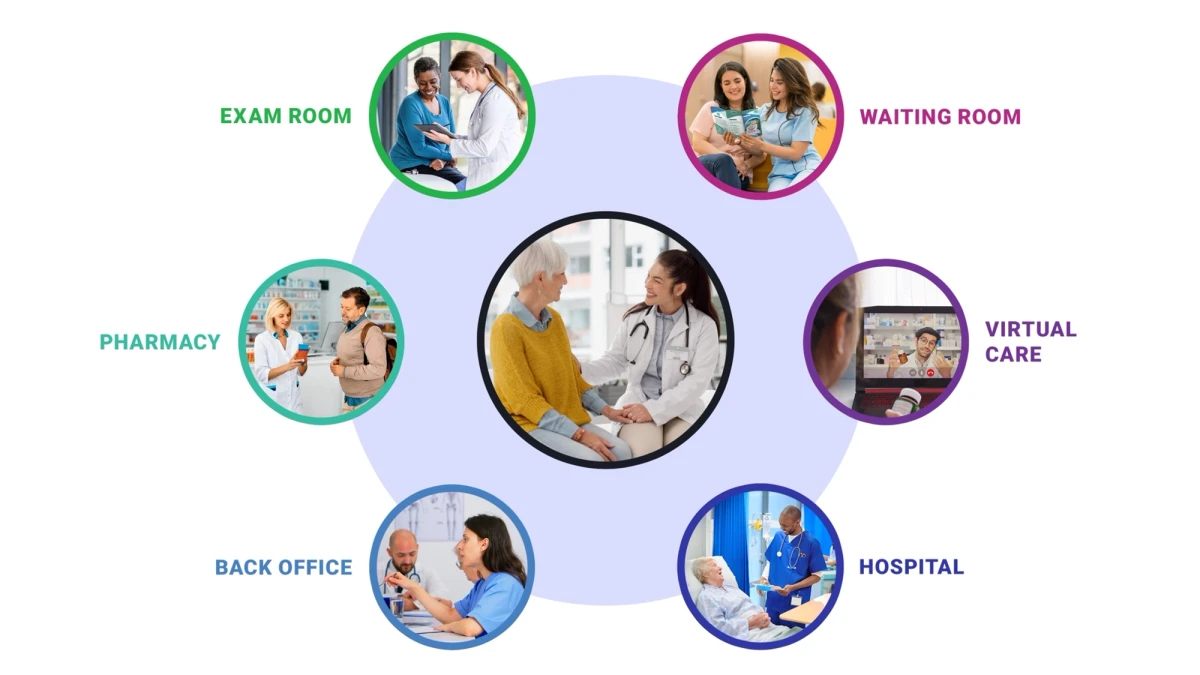
Patients begin forming perceptions and preferences long before they step into a clinical setting. For both new diagnoses and for those with chronic conditions, patients research symptoms, consume content, confirm appointments and mentally prepare for what’s ahead. By the time they arrive, they are already engaged in the decision-making process. And after they leave, that process continues—through follow-up care, pharmacy interactions and ongoing adherence.
For marketers, this means that POC media can’t be treated as a single activation. It must be approached as a coordinated journey. Messaging needs to build over time, reinforcing and evolving rather than repeating. Creative must adapt to context, recognizing that what resonates before an appointment may differ from what is needed during or after it. Engagement must extend beyond the moment of diagnosis or prescription and into the broader experience of managing health.
Get POC marketing tips and best practices here.
The brands that succeed with this connected, integrated approach will be those that think in pathways, not placements—those that understand how each moment connects to the next and design their strategies accordingly.
The “Waiting Room” Has Expanded—and So Has Its Influence
Another key takeaway from the Summit was the myriad ways marketers can now reach patients in the waiting room—and the recognition that it is far more influential than the industry has given them credit for historically.
Although the waiting room was traditionally viewed as a passive or transitional time, Summit speakers emphasized that the waiting room is a highly consequential moment in the care journey. It is where patients sit with uncertainty, process emotions and prepare for conversations that may significantly impact their health. It’s also where they are particularly receptive to information—focused, attentive and motivated to understand what comes next.
However, what’s changed most is that the waiting room is no longer confined to a single physical space. As the POC landscape has evolved and grown over time, new ways to activate the waiting room are emerging. The waiting room now extends across multiple environments, including digital pre-visit experiences, check-in processes, hospital rooms, infusion centers and even pharmacy settings. In each of these moments, patients are not simply waiting—they are actively engaging with information, forming questions and shaping expectations.
The role of POC media isn’t just to reinforce awareness, but to activate intent.
These emerging waiting room settings fundamentally change how marketers should approach these environments. The role of POC media isn’t just to reinforce awareness, but to activate intent. Messaging should connect to what patients have already seen in other channels, helping to bridge the gap between general awareness and personal relevance. It should provide clarity and direction, enabling patients to enter conversations with greater confidence and understanding.
Importantly, these waiting room moments also represent an opportunity to reduce friction that impedes care, adherence and follow-through. By introducing resources such as savings programs or access tools at the right time, brands can help remove barriers before they become obstacles. Creative, too, must be designed with the waiting room environment in mind—visually engaging, contextually appropriate and tailored to a healthcare-focused mindset.
The takeaway is clear: the moments before the clinical conversation aren’t peripheral—they’re formative. And when leveraged effectively, they can meaningfully shape what happens next.
The Exam Room Is Where Everything Converges
If the waiting room primes the conversation, the exam room is where everything comes together.
Conversations at the Summit reinforced that the exam room remains the most critical environment for decision-making in healthcare. It’s where patients and providers align, where questions are asked and answered, and where treatment paths are ultimately determined. But what happens in this space is increasingly influenced by everything that precedes it.
Patients are no longer arriving as blank slates. They come prepared with information, perspectives and, in many cases, expectations. They are more likely to ask questions, challenge assumptions and seek clarity around their options. This shift reflects a broader trend toward patient empowerment—but it also introduces new complexities into the clinical interaction.
At the same time, providers are operating under increasing pressure. Time constraints, administrative demands and the need to address both clinical and emotional aspects of care make each interaction more complex. In this environment, efficiency and clarity become essential.
POC media, when executed effectively, plays a critical role in supporting both sides of this exam room interaction. It can help patients arrive better prepared for the conversation, equipped with the right questions and a clearer understanding of their condition. It can also support providers by delivering relevant, concise information that enhances—not disrupts—their workflow.
Increasingly, this support extends into technology. Tools such as real-time prescription benefit integrations allow providers and patients to consider cost and access during the decision-making process, rather than discovering challenges later. This shift not only improves efficiency but also helps reduce drop-off between prescription and fulfillment.
Ultimately, the exam room isn’t just where decisions are made—it is where all prior touchpoints converge. And when those touchpoints are aligned, the impact of that moment becomes significantly more powerful.
The Back Office Is an Often Hidden—but Critical—Moment of Influence
While much of the focus in POC marketing has historically been on patient-facing environments, reaching healthcare providers in moments where they’re most engaged is also valuable. To do so, Summit speakers highlighted the importance of a less visible but equally influential space: the back office.
This is where providers step away from direct patient interaction and spend a good deal of their time. Unlike interactions in the exam room, which are shaped by real-time interaction, the back office allows for deeper processing. Providers are constantly evaluating information, considering options and connecting insights across patients and cases. This creates a unique opportunity for engagement—one that is distinct from, but complementary to, other POC tactics.
For marketers, activating in the back office requires a different approach. Content in this environment must be concise, credible and immediately useful. It should respect the provider’s time and cognitive load, delivering value without requiring significant effort to interpret. At the same time, it should be tailored to the specific needs and roles of different providers, recognizing that physicians, nurse practitioners, physician assistants and pharmacists may prioritize different types of information.
Perhaps most importantly, the back office represents an opportunity to influence not just individual decisions, but patterns of thinking. By supporting providers in these reflective moments, brands can help shape how they approach similar cases in the future.
It is a quieter moment in the care journey—but one with meaningful impact.
Care Is No Longer Just Physician-Centric
Another defining theme of the Summit was the expanding role of the care team.
This shift reflects both structural changes in the healthcare system and the increasing complexity of patient needs. As care becomes more distributed, so too does influence. Decisions are shaped not just by a single provider, but by a coordinated team working across specialties and settings.
For pharmaceutical marketers, this has significant implications. Traditional messaging that focuses primarily on physicians no longer reflects the reality of how teams deliver care. Instead, strategies must account for the full ecosystem of healthcare provider (HCP) decision-makers and influencers, each with their own perspectives, responsibilities and information needs.
This requires more nuanced targeting and more tailored messaging. It also requires a deeper understanding of how these HCPs interact with each other—how information flows between them, where gaps exist and how those gaps can be addressed with educational materials.
Importantly, it also changes how marketers should approach patient-focused communications. Patients aren’t just interacting with one provider; they’re navigating a broader system. Messaging that acknowledges and supports this reality is more likely to resonate and drive action.
Patients Are More Informed—but Also More Overwhelmed
The Summit also underscored a critical tension in today’s healthcare landscape: patients are more informed than ever before, but they are also more overwhelmed.
Access to information has expanded dramatically, driven by digital platforms, social media and direct-to-consumer advertising. Patients are arriving at the POC with a wealth of knowledge—or at least exposure to information—about their conditions and potential treatments.
But this influx of information is not always beneficial.
In many cases, it creates confusion rather than clarity. Patients must navigate conflicting sources with varying levels of credibility and an overwhelming volume of content. This can lead to uncertainty, anxiety and, at times, misinformed expectations.
This dynamic places additional pressure on providers, who must not only deliver care but also help patients interpret and contextualize what they have encountered. It also creates a critical role for Point of Care media in bridging the gap between information and understanding.
For marketers, this represents both a challenge and an opportunity. The goal is no longer simply to inform, but to clarify. Content should be designed to simplify complex concepts, reinforce credible information and guide patients toward more productive conversations with their providers.
This means prioritizing clarity over volume, relevance over reach and utility over promotion. It also means recognizing that the most effective content is not necessarily the most comprehensive, but the most helpful in a specific moment.
The brands that succeed will be those that help patients make sense of their health and their conditions with credible information—not just learn more about it.
Trust Is the Currency of Modern Healthcare Marketing
Across multiple sessions, trust emerged as a central theme—and a defining factor in effective healthcare communication.
In an environment characterized by increasing complexity, uncertainty and high-stakes decisions, trust becomes the foundation for engagement. Patients must trust the information they receive. Providers must trust the resources they use. And both must trust that the systems and partners supporting them are aligned with their best interests.
Trust with these audiences isn’t built through a single interaction. It’s the result of consistency across touchpoints, transparency in messaging and alignment with real-world needs. It’s reinforced when experiences feel connected and coherent, and it’s undermined when they feel fragmented or overly promotional.
For pharmaceutical marketers, this reinforces a broader shift in approach. Success is no longer defined by persuasion alone, but by partnership. Brands must position themselves not just as sources of information, but as contributors to better outcomes.
POC media is uniquely positioned to support this role. By engaging patients and providers in moments that matter, and by delivering value in those moments, brands can build credibility and trust over time.
In many ways, trust is a strong indicator of effectiveness—and an important outcome of a well-executed POC strategy.
Integration Beats Isolation: Point of Care Must Be Part of the Broader Mix
Another key takeaway from the Summit is that POC media can’t operate in isolation.
Too often, it’s treated as a standalone tactic—separate from broader marketing efforts and evaluated independently. But this approach limits its effectiveness and underestimates its role in the overall ecosystem.
In reality, POC media is most powerful when it’s integrated into a coordinated strategy. It should connect with upstream channels such as television, digital and social media, reinforcing and contextualizing messages that patients have already encountered. It should also extend into downstream moments, supporting follow-through and adherence.
This integration creates continuity, ensuring that patients experience a cohesive narrative rather than a series of disconnected messages. It also enhances effectiveness, as each touchpoint builds on the last, moving patients closer to action.
For marketers, this requires a shift in planning approaches. Marketers shouldn’t consider POC at the end of their planning process, but at the center of it. It should inform how campaigns are structured, how messages are sequenced and how success is measured.
The goal is not just to reach patients and providers, but to create a connected experience that supports decision-making at every stage.
Measurement Is Evolving—but Still Needs to Catch Up
Despite strong belief in the value of POC among Summit speakers and attendees, measurement remains one of their most persistent challenges.
Traditional marketing mix models often struggle to capture the true impact of POC media due to limitations in data, methodology and alignment with real-world dynamics.
Inputs may rely on proxy metrics rather than actual exposure, leading to incomplete or distorted insights. Aggregated data can obscure meaningful differences between environments or audiences. And the timing of outcomes may not align with how impact is measured, creating further disconnect.
The result is a gap between belief and validation. Marketers recognize the importance of POC media, but the data doesn’t always reflect its full contribution. This can lead to conservative decision-making, where POC investment is limited not by lack of impact, but by lack of confidence.
More granular data and better alignment between inputs and outcomes is needed
Addressing this measurement challenge requires both methodological improvements and a broader shift in perspective. More granular data, better alignment between inputs and outcomes and complementary measurement approaches will all play a role. At the same time, marketers must be willing to consider a more holistic view of impact—one that accounts for influence across the entire journey, not just immediate outcomes.
See the latest steps POCMA is taking to evolve how we recommend measuring the impact of POC media.
Until measurement fully catches up, balancing data with informed judgment will remain essential.
The Future of Point of Care Is Connected, Intelligent and Human
Looking ahead, conversations at the Summit pointed to a future where Point of Care becomes even more integrated, more data-driven and more responsive to the needs of patients and providers.
Advancements in technology, including artificial intelligence (AI), are beginning to reshape how information is delivered and how decisions are supported. Care teams will continue to expand, and patient expectations will continue to rise. At the same time, pressures on the healthcare system will persist, making efficiency and effectiveness more important than ever.
But amidst all of this change, one principle remains constant: healthcare is fundamentally human.
Technology can enhance the POC experience, but it can’t replace the need for empathy, clarity and connection. The most effective POC strategies will be those that combine innovation with a deep understanding of human needs—those that support patients and providers not just as users of information, but as people navigating complex and often emotional decisions.
For pharmaceutical marketers, this represents both a challenge and an opportunity. The future of POC will be defined not just by where and how brands show up, but by how well they understand and support the people they are trying to reach.
Final Thought: Moving From Presence to Impact
The 2026 POC Now Summit reinforced a critical evolution in how we think about interactions at the Point of Care.
It’s no longer enough to be present in key moments. To drive meaningful impact, brands must understand the full care journey, align messaging across touchpoints, support both patients and providers and integrate seamlessly into the realities of clinical care.
POC is where decisions happen—but more importantly, it is where understanding is built, trust is earned and outcomes are shaped.
The opportunity for pharmaceutical marketers is not just to participate in these moments—it is to elevate them.