Reaching Multicultural Audiences at the POC: Lessons from the Award-Winning Beyfortus Campaign
BlogsWednesday May 27, 2026
The Point of Care (POC) is a critical juncture in healthcare. It’s the space where patients and providers ask questions, finalize decisions, and where patient journeys take decisive turns. But for any message to truly resonate at the POC, it must authentically reflect and speak to the lived experiences of those receiving the message.
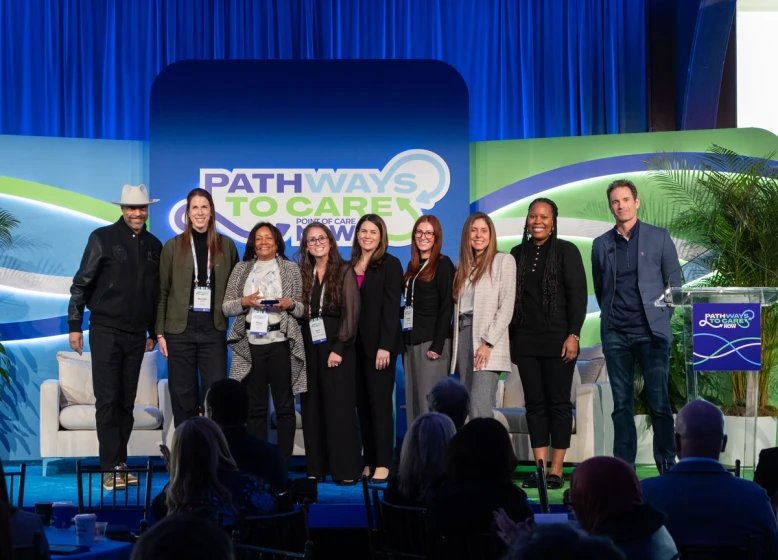
At March’s POC Now Summit, we celebrated a campaign that prioritized authentic audience connection: Havas Media Network and Sanofi for Beyfortus. The team took home the Best Multicultural Campaign award, which lauds campaigns that engage diverse communities at the POC. Successful multicultural campaigns often go beyond simple translations to demonstrate cultural competence and meaningful connection.
To unpack the strategy, execution, and outcomes of the campaign, we sat down with Taylor Wexler, the Director of Point of Care Investments at Havas Media Network. What emerged from our conversation was a masterclass in demographic intelligence and empathetic messaging.
The Business Challenge: Navigating a Complex Competitive Landscape
When launching a new therapy, especially one that's first in its class, marketers face the dual challenge of educating the market while also building brand equity. Beyfortus was the first therapy of its kind to treat Respiratory Syncytial Virus (RSV) in children under one year of age. But its competitive landscape was also uniquely complex.
Not only was there a direct competitor to Beyfortus attempting to capture the same market share, but there was also what Wexler described as a "philosophical piece" to the competition. Another entrant had arrived on the market prior to Beyfortus, offering a maternal immunization instead of an infant immunization.
This meant that Beyfortus’ target audience of expectant and new parents faced a complex decision long before their infant was even born. "[Parents] were presented with this choice - do I immunize as the expectant parent or do I immunize once my child is here," Wexler explained.
Historically, the strategy for approaching this kind of landscape is rooted in building share of voice against competitors. However, as the campaign transitioned from general RSV awareness to branded media, the Havas team recognized that a traditional approach would fall short. "[Our] strategic mindset went from a competitive focus to [one that focused] more [on] consumer understanding," Wexler noted.
Identifying the Missing Voices in the Conversation
To get started, the team took an honest look at who was being reached by their traditional marketing efforts—and more importantly, who was being left behind.
"Who's missing from the conversation? Who are we not connecting with?" Wexler asked, highlighting the guiding questions of her team’s strategy. "And how do we find those folks? How do we connect with [them]?".
The HAVAS Strategic Planning team identified two key patient populations outside of their general market that required a specialized approach: Black Americans and Spanish speakers. For these populations, the challenge was not a lack of willingness. "They consistently show openness to immunization when they receive credible guidance at the right moment," Wexler detailed.
And in building their campaign to reach these groups, the team uncovered a critical insight: the barrier for these patient populations was not financial access.
The actual hurdle was awareness and assurance. As Wexler stated, "it's not an access issue. It's really an information issue." These families needed the information to make an informed choice, and "they just need the confidence to take action."
Redefining the Point of Care Footprint
To build this confidence, the Havas team had to reach these expectant and new mothers where they already sought trusted guidance. In previous campaigns, the team activated similar POC tactics across demographics to reach expectant and new mothers. But for this campaign, they reevaluated their approach using geographic and patient mix data to ensure their message was showing up in the right spaces unique to each demographic.
Crucially, this meant redefining what the POC actually looks like for different communities. "We re-evaluated the traditional mindset of point of care being an office," Wexler pointed out. "People get healthcare in a number of different settings".
By stepping out of the traditional marketer mindset, the team sought out the actual trusted sources within these communities. Wexler provided compelling examples of these non-traditional touchpoints:
- Community Health Centers: Recognizing that standard NPI target lists often miss vital community hubs.
- Faith-Based Initiatives: "The African Methodist Episcopal Church has a community health commission and they employ HCPs to help connect with their parishioners. They have become a trusted source for folks within that community," Wexler shared.
- Federally Qualified Health Centers (FQHCs): Leveraging centers that serve vulnerable populations but "typically don't make NPI lists."
- High-Density Spanish-Speaking Offices: Ensuring a robust presence in practices that have high volumes of Spanish-speaking patients.
In moving beyond standard POC placements, you open the door to connecting with the people who need the message the most, in the places they’re most willing to receive it.
Empathy and Authenticity in Creative Execution
Reaching the right audience in the right location is only half the work; the message itself must also resonate authentically. And the industry has a long history of simply translating general market materials or placing lookalikes in collateral when communicating with Spanish-speaking patients and Black patients, a practice that often falls flat.
This required confronting uncomfortable realities. "It's foolish to think that you can have [a] conversation [with these patients] and not talk about unconscious bias," Wexler stated. "And not talk about the unfortunate history of healthcare for black and brown folks in our country, in particular when it comes to pregnancy and when it comes to infants."
Creative Strategy
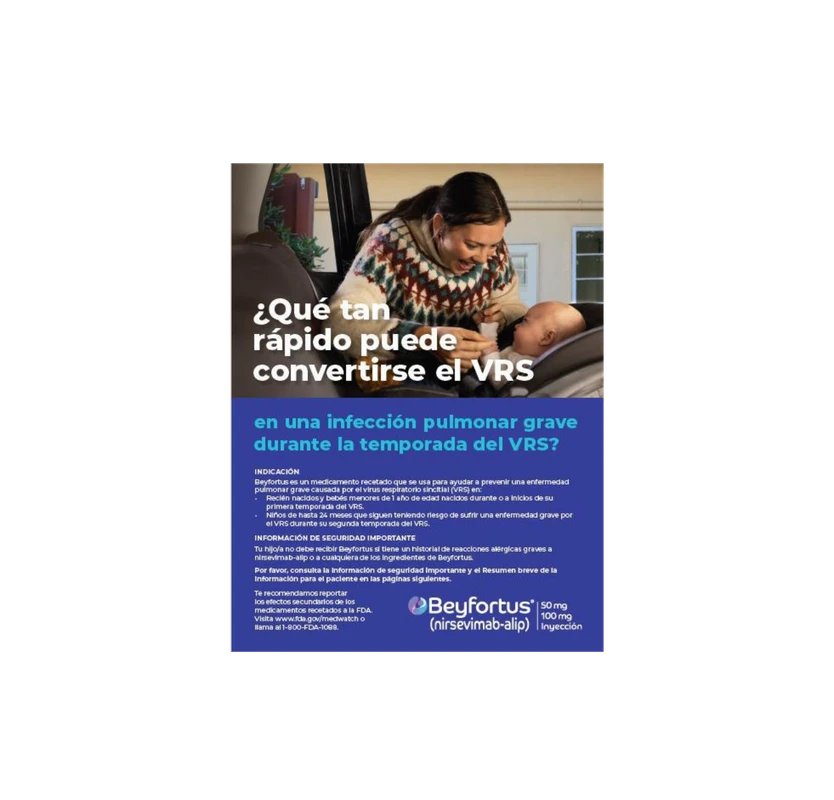
The creative strategy leaned heavily into empathy and contextual relevance. The messaging was tailored to each clinical environment, such as waiting rooms and exam rooms, as well as to the specific linguistic needs of the populations served.
In markets with a high volume of Spanish-speaking families, for example, every message appeared in both English and Spanish. This ensured parents had clear, trustworthy information in both languages. Because the team also understood that language preferences are deeply nuanced.
"Some [native Spanish speakers] prefer to get their scientific information in English or vice versa," Wexler explained. " It's all about understanding that this is a very individualized experience for someone."
Furthermore, the creative had to account for varying levels of health literacy. While prompting patients to ask questions is a common POC tactic, Wexler noted its limitations: "That's great [only if you assume patients] have enough health literacy to understand the questions they’re asking and understand the answers they’re getting back." So every asset utilized concise, actionable language carefully designed not to overwhelm caregivers during high-stress moments.
Expanding the Timeline: The Power of a Year-Round Journey
Historically, the industry treats RSV campaigns as seasonal bursts, aligning media spend with peak virus incidence. However, the patient journey for an expectant mother does not follow a strict seasonal calendar.
"The journey starts as an expectant parent and then doesn't end until you have a new infant,” Wexler noted. "So you're with that person through that decision-making process as they transition from patient to caregiver".
Recognizing this, the campaign utilized a year-round, journey-specific approach. Outreach systematically began during pregnancy, continued through delivery, and persisted into postpartum recovery and early pediatric visits.
"A major innovation was sustaining education beyond peak RSV season," Wexler noted. By remaining visible during low-incidence months—a time when many families engage deeply with preventive guidance—the campaign built trust well ahead of the traditional viral season.
Wexler summarized this shift by reading directly from her award submission during our interview: "This campaign reimagined Beyfortus' POC strategy through a deliberately multicultural lens, recognizing that RSV risk, access barriers, and information gaps disproportionately affect diverse communities by expanding from a short seasonal communication burst to a fully connected year-round model."
The Point of Care as the Ultimate Catalyst for Action
Why was POC so vital in this specific scenario? It served as a safeguard against competitive messaging and the most effective prompt for provider dialogue.
The primary utility of the POC environment in this campaign was to equip the patient right before they interacted with their provider. "We [made] sure [to encourage] folks to engage with providers in a meaningful way. And [we equipped] them with those visual prompts in that moment to be like, 'Oh, that's right. I wanted to talk to you about this or can you tell me more about this?'" Wexler said.
This visual prompt was essential because patients were actively interviewing pediatricians and discussing vaccine schedules. The POC media served to prompt the behavior of discussion, which subsequently led to patients moving forward with the brand.
A Call to the Industry: The Future of In-Language Media
While the Beyfortus campaign sets a high bar for multicultural POC marketing, Wexler believes the industry still has significant room to evolve, particularly regarding how in-language media is sourced and priced.
She acknowledged the operational challenges of publishing creative in multiple languages, but remained steadfast that the industry must prioritize equitable communication. "Wouldn't it be nice to live in a world where you could say, 'Hey, I need to run this in multiple different languages. How do we get that out there?'" she proposed.
Ultimately, she views standardized translation as the bare minimum required for ethical healthcare marketing. "Translation at a minimum becomes the default that is available for folks because that is such a deeply personal thing," she noted. "If we're not in language, how are we doing that?"
Looking Ahead
Havas Media Network and Sanofi’s Beyfortus campaign serves as a powerful blueprint for the future of multicultural marketing at the POC. By abandoning the one-size-fits-all seasonal approach in favor of a year-round, culturally attuned, and deeply empathetic strategy, the team established a new standard of care in healthcare communication for underserved populations. They proved that when you truly understand your audience, meet them in their trusted spaces, and speak to them in their preferred language, you generate confident action and, ultimately, better health outcomes.