The POC NOW Summit will explore how point of care strategies can better support patients and providers across every step of the care journey—not just the prescribing moment.
Register now to join the conversation.
When pharmaceutical marketers think about how their messaging can support healthcare decision-making, many prioritize being top of mind at the moment that a healthcare professional (HCP) issues a prescription.
Diagnosis. Recommendation. Script written.
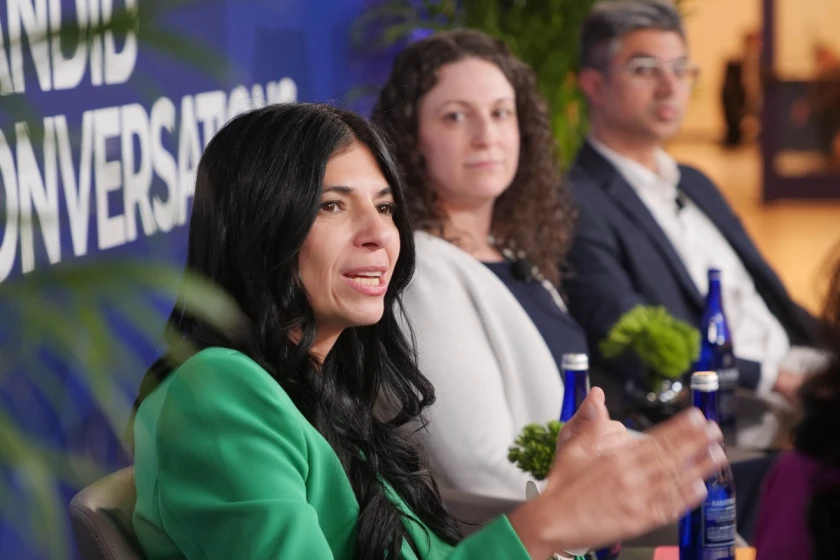
But during POCMA’s Candid Conversations event, where we spoke with thirteen HCPs about what pharmaceutical marketers can best do to support patients and care teams, healthcare professionals made something unmistakably clear: prescribing is only one moment in a much longer journey—and often not the most influential one.
“Movement of the medication from A to B is half the journey. And then the other half is…having someone decide to simply put a pill in their mouth or do an injection once a week or once a month.”
Healthcare professional
The audience at Candid Conversations nodded.
Much of the work that determines adherence, outcomes, and trust begins after the prescription is written. And that work is carried by the entire care team, not just the prescribing HCP.
"Medicine Is a Team Sport"
“I love that patients are able to access information quickly. My goal as a doctor is to make sure that they use it in the best way possible, because there are a lot of dangers, such as misinformation or really misdiagnosis,” said another healthcare professional.
“Medicine is a team sport.”
Care doesn’t begin with and end with a single physician encounter. Today’s patient often interacts with primary care providers, specialists, nurse practitioners (NPs), physician associates (PAs), pharmacists, care coordinators, and back-office teams—sometimes all in the same month.
Patients know these team members by name. And they build trust with the healthcare system across the care continuum.
"There's no way that a physician can do it on their own."
Healthcare professional
Yet many healthcare marketing strategies remain focused on the prescribing moment and the prescribing provider. But if prescribing is only a small part of the care journey, supporting only that moment leaves the rest of the care pathway vulnerable.
The Prescription Is a Starting Line—Not the Finish Line
From the outside, prescribing can look like the most decisive moment in care: an HCP diagnoses a patient, selects a therapy in partnership with them, and sets a care plan in motion.
Inside clinical practice, however, that moment is often just the beginning of a complex chain of events that determines whether treatment actually happens.
Providers described challenges that unfold after the visit—many of which can delay or prevent treatment from starting: prior authorizations that stall, insurance denials that require back-and-forth, copay conversations that change decisions, pharmacies that don’t have product in stock, patients hesitating to start treatment once they’re home, injection training that requires reinforcement, side effects that surface days later, and more.
The prescription is written in seconds. But the pathway that follows can stretch across weeks. And that pathway is where breakdowns can occur.
All of these after-visit moments represent areas where pharmaceutical marketers can play a role in supporting education that encourages treatment adherence.

Pharmacists: Gatekeepers of Adherence
One of the most consistent themes across our HCP conversations was the essential role pharmacists play in determining whether therapy is initiated—and sustained.
The pharmacists we spoke with described their role not as dispensers, but as translators and troubleshooters. They are often the final checkpoint before therapy begins and the first place patients voice concerns they didn’t feel comfortable raising in the exam room.

They see what happens when the copay is higher than expected. They see confusion over dosing. They see fear about injections. They see patients quietly walk away.
“We are the drug experts… oftentimes these patients are hit with a huge load of medication, and they don’t understand it all.”
A healthcare professional
In oncology and chronic disease, for example, patients don’t leave with a single therapy. They leave with primary treatments layered with supportive medications, side effect management strategies, and follow-up instructions. If those regimens feel confusing or intimidating, adherence falters.
The medication may have moved from A to B. But the patient hasn’t moved with it. Pharmacies represent a critical education opportunity for marketers seeking to support patients after the script is written.
Nurse Practitioners and PAs: The Continuity Engine
If pharmacists are the final checkpoint before a patient begins treatment, nurse practitioners (NPs) and physician associates (PAs) are often the continuity engine of care during follow-up visits.
Across specialties—from primary care to oncology—NPs and PAs described seeing patients far more frequently than collaborating physicians. They manage day-to-day symptoms. They adjust dosing. They field follow-up calls. They answer portal messages. And they are often the ones patients turn to when something doesn’t feel right.
“I am there from day one of treatment all the way through… I get to know them. We develop a rapport.”
Healthcare professional
develop a rapport.”
Because of their proximity, advanced practice providers (APPs) can focus on patients’ lived experiences, asking questions like, “How are you tolerating this? Did you start the medication? Are you sleeping? Are you nauseated? Are you worried?”
As a result, they are frequently the first to hear about side effects, affordability concerns, or hesitations that patients didn’t share earlier. And that proximity matters. Because adherence isn’t just about starting a therapy. It’s about sustaining it.
“The worst thing that you can do is not tell a patient some information and they gain it from social media and come back to you and you're like, that’s true—because you’ve just lost all trust.”
Healthcare professional
The extended care team becomes the buffer between information overload and practical follow-through.

The Adherence Reality
Our industry often discusses adherence in terms of percentages and refill rates. But what providers described was far more human.
They talked about patients balancing multiple jobs. Parents worried about how treatment will affect childcare. Elderly patients confused by polypharmacy. People who are simply overwhelmed.
“Fear is the thing we should be hunting. A mom may be afraid of not being able to care for her children. So maybe [she’s] picking a lesser stand or non standard of care because [she’s] trying to survive. So meeting that survival instinct and dispelling fear that is where we need to meet people.”
Healthcare professional
If fear isn’t addressed across touchpoints, patients look elsewhere for reassurance. And that’s why extended care teams matter so deeply.
Because adherence is rarely decided in the exam room alone. It is reinforced—or weakened—at the pharmacy counter, in follow-up calls, in EHR messages, and when side effects appear days later.
Every touchpoint either strengthens patient commitment or introduces doubt.
When Communication Breaks Down
Despite the complexity of modern care, providers acknowledged that communication gaps between specialties or care settings remain one of the biggest risks to successful patient outcomes.
Sometimes the breakdown is financial. A medication is prescribed. The patient arrives at the pharmacy. They hear the cost. They leave. But nobody is notified.
Sometimes it’s educational, 90% of adults struggle with basic health information.1 Instructions are printed. The patient nods. At home, confusion sets in. They may not know when to take a supportive medication or how to use a device correctly.
One cancer survivor described mis-timing a supportive therapy because the instructions weren’t clearly reinforced. The medication itself wasn’t the issue. The experience around it was.
Other times, the gap is emotional. Patients may feel embarrassed to admit they can’t afford a medication. Or that they’re afraid of injections. Or that they stopped taking something.
“The stigma of coming in and saying that they can’t do it somehow prevents them from telling.”
Healthcare professional
When educational information that patients receive from providers (much of which can be augmented by pharma) isn’t strong enough to surface those barriers, silence replaces transparency. And silence undermines outcomes.


Technology, EHR, and the Back Office Reality
Technology is reshaping what happens after the prescription as well.
Providers described increasing reliance on AI tools, EHR integrations, and digital messaging platforms to manage follow-up instructions, patient education, and prior authorization workflows. But they were also clear: tools only work if they integrate seamlessly into existing workflows.
If a resource requires extra steps, extra time, or extra logins to digest, it won’t be used. And when providers don’t use the support tools available to them, the information those tools provide never reaches patients, and patients lose reinforcement at critical moments.
The back office—often invisible to patients—plays an enormous role in adherence. Insurance verification, denial management, copay navigation, and refill coordination are not administrative details. They are determinants of whether therapy actually continues.
When considering educational resources for the continuum of care, pharmaceutical marketers should continue to think beyond the exam room to these back-office settings and how POC media can be seamlessly integrated into provider workflows.
From Prescription to Pathway: Going Beyond a Moment in Time
Our HCP conversations reinforced a fundamental shift in perspective: The industry often celebrates initiation, but providers—and the broader care team—are responsible for continuation. A prescription may be written in seconds, but treatment adherence occurs over months and across different care settings, built across a network of touchpoints.
This understanding of how modern care journeys work demands that we broaden our understanding of point of care settings—such that our focus becomes less about one encounter and more about an ecosystem: the exam room, the pharmacy, the EHR portal, the care coordinator’s call, the injection training visit, and the follow-up appointment.
Supporting only the prescribing moment ignores the broader pathway that determines whether care succeeds, and whether patients ultimately stay on therapy long enough to see outcomes.
1Office of the Surgeon General: National Assessment of Adult Literacy